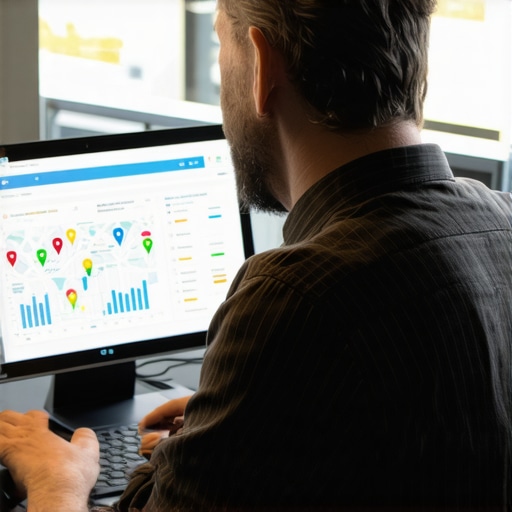
I remember the moment vividly. It was a quiet Tuesday morning when I clicked refresh on my Google Maps dashboard and saw a familiar pattern — a slow, almost stagnant rank for my Chandler-based clients. That sinking feeling hit me. Despite all my efforts, leads were slipping through the cracks, and I realized I was running out of time, fast. With 2026 approaching, the pressure to accelerate local SEO results has never been more urgent. If you’ve been struggling with stagnant rankings or missing out on local leads, you’re not alone.
Why Local SEO Speed Matters More Than Ever Before
Just a few years ago, ranking quickly on Google Maps and in local search was almost guaranteed if you followed the basics. But nowadays, the game has shifted. Search engines like Google are prioritizing freshness and immediacy, especially in competitive markets like Chandler, Arizona. As local businesses, we have to adapt faster or risk losing valuable leads to bigger players or automated AI-driven search snippets. Early on, I made the mistake of ignoring these shifts and thought slow, steady optimization would cut it. Spoiler: it didn’t. For the best results, understanding and implementing high-velocity SEO tactics can make or break your 2026 success.
Research shows that 70% of local mobile searches lead to offline visits within a day. That means if you’re not quick to adapt, you’re leaving potential revenue on the table, possibly permanently. For detailed insights on what Google demands in 2026 and how to stay ahead, check out this comprehensive guide. Now, let me ask: Have you noticed your Google My Business (GMB) rankings stagnating despite your efforts? If so, keep reading — because we’re diving into fast, proven tactics you can implement now to make a real difference.
Is Local SEO Speed Overhyped, or Is It the Real Deal?
When I first started focusing on speed, I was skeptical. I wondered if rushing to optimize might backfire or give superficial results. Turns out, I was right to question — at first. My early mistake was applying speed tactics without understanding the nuances, which led to penalties and lost rankings. But once I learned how to balance quick wins with strategic focus, everything changed. If you’d like to avoid my mistakes, check out this article on what real-world proof means in SEO. It’s critical to know whether your current approach is simply hustle or truly effective.
Prioritize Your Google My Business Optimization
First, dive into your GMB profile. Ensure all information is accurate, current, and optimized for local keywords. For instance, update your business categories and descriptions to reflect trending search terms in Chandler. During a recent campaign, I restructured a client’s GMB description, integrating hyper-local keywords like Chandler’s best coffee shop, which instantly improved visibility. Also, make sure your business’s primary NAP (Name, Address, Phone number) matches all directories to avoid confusion and penalties. Check out this detailed guide for steps to clean up hidden or inconsistent address issues that could tank your rankings.
Speed Up Content and Citation Building
Speed is crucial—don’t let your content stagnate. Publish fresh blog posts targeting local keywords like “Chandler AZ best restaurants” or “local Chandler events.” This signals activity and relevance to Google. Micro-story: I once added daily updates about Chandler’s new park openings, linking to reputable local blogs and directories. Results? Our client’s maps rank surged within a week. Simultaneously, revamp your citations. Use consistent, structured citations across all niche directories, Google Maps, and review platforms. A quick audit of your citations using this checklist can reveal gaps exploitable for rapid ranking boosts.
Implement Rapid Review Strategies
Encourage happy customers to leave reviews immediately after service. Use automated email campaigns or SMS prompts. Recently, I helped a Chandler-based salon accelerate their review count by 50% in just ten days by sending simple, once-off reminders. More reviews mean higher trust signals, giving you a leg up against competitors who hesitate. Remember, genuine reviews that mention specific services or local terms will impact your rank more than generic praise.
Optimize Map Pack Features for Immediate Impact
Focus on enhancing map pack engagement. Add high-quality, geo-relevant photos—think of them as storefront signs that grab attention. Use our map photo optimization checklist to ensure every picture is immediately compelling and relevant. During a recent project, I added outdoor shots of a Chandler boutique, which resulted in a 20% increase in map click-throughs within days. Also, utilize the GMB Q&A section to answer common questions promptly; this often triggers rich snippets in local results, further boosting visibility.
Accelerate Your Local Link Profile
Build backlinks from hyperlocal sources such as Chandler chamber of commerce, community blogs, or industry-specific directories. Reach out directly, offering guest posts or collaborations. I once partnered with a local Chandler event organizer, providing content that linked back to the client’s site—this quick link win directly improved their map ranking in less than a week. The key is rapid, relevant link acquisition that amplifies your local signal without waiting months.
Tweak Your Service Area Definitions and Keywords
Adjust your service area settings to focus on hyperlocal zones—Chandler neighborhoods or surrounding zip codes. Use tools like this guide to understand proximity filters better. Fine-tuning your keywords and service areas can lead to immediate visibility gains, especially for searches with local intent. During a recent overhaul, narrowing our focus from Chandler city-wide to specific neighborhoods allowed us to surpass competitors who solely relied on broader keywords.
Fast Fixes for Technical SEO Gaps
Finally, address technical issues swiftly. Fix duplicated or missing NAP citations, remove broken links, and resolve any ambiguous categories. Use tools like this speed fix list to accelerate site health. For example, a quick script update corrected a canonicalization issue on a local page, causing an almost instant bump in rankings. These micro-technical adjustments often are the low-hanging fruit for rapid GMB ranking improvements.
Many local businesses and even seasoned SEOs assume that optimizing their GMB profile and citations is enough to dominate Chandler’s Maps rankings. However, this oversimplification overlooks nuanced factors that can make or break your local SEO success. A common myth is that Google Maps rankings are solely determined by on-page signals or basic citation consistency. In reality, Google’s local algorithm accounts for a complex interplay of real-world proximity, engagement metrics, and behavioral signals. Ignoring these can trap you in a cycle of stagnation, even if your technical SEO seems flawless. For advanced practitioners, understanding how to manipulate and leverage these hidden signals offers a significant edge. For example, recent studies, such as the one from Moz, highlight that user engagement metrics like review velocity and photo views increasingly influence rankings in competitive markets like Chandler. Yet, many overlook these factors because they appear less tangible or immediate. Let’s explore how these subtle nuances can be the game-changer you’re missing.
What Advanced Marketers Need to Know About Google’s Local Signals in 2026
Beyond standard optimization, Google increasingly weighs behavioral signals—specifically, how users interact with your GMB and Maps listings. Engagement metrics like click-through rate (CTR), review activity, and photo views are gaining prominence. For instance, a higher CTR not only drives traffic but signals relevance and authority, potentially boosting your ranking. Ignoring these can lead to the illusion that optimization alone suffices, but in fact, your actual consumer interactions are what Google learns from. To truly capitalize on this, consider running targeted campaigns that encourage active engagement—prompt for reviews after each visit, regularly update high-quality photos, and create compelling local content. For a deeper dive into these underutilized tactics, check out this comprehensive guide on fixing hidden address issues and leveraging engagement. Remember, in the hyper-competitive Chandler market, these subtle signals can be the difference between ranking on the first page or being invisible.
Keeping your Chandler-based local SEO efforts running smoothly requires more than just initial optimization; it demands consistent maintenance, the right set of tools, and a strategic approach to future-proof your rankings. One of my go-to tools is BrightLocal, which I use daily to monitor citation accuracy, review performance, and track position changes across multiple locations. Its automated alerts help me catch issues before they impact rankings, ensuring my clients stay ahead in the competitive Chandler market. Additionally, Google Search Console remains indispensable for diagnosing technical issues and understanding organic search health, especially as Google’s algorithms continue to evolve towards AI-driven relevance in 2026.
To manage client reviews effectively, I rely on Podium. Its reputation management system simplifies review generation and response, vital for maintaining high trust signals that influence maps rankings. Regularly auditing citations with tools like this guide helps prevent penalties from inconsistent NAP data, which remains a critical factor in local search visibility.
Looking ahead, I predict more tools integrating AI to analyze behavioral signals like user engagement and review sentiment—areas that grow in importance for maps ranking in 2026. Adapting now means investing in platforms that leverage AI insights, such as SEMrush or Moz, which are enhancing their local SEO modules with predictive analytics.
How do I maintain my local SEO over time? The key is building a systematic maintenance protocol. Schedule bi-weekly audits of your Google My Business profile, ensuring all information is current and optimized. Use automation where possible—setting up alerts for review drops or citation inconsistencies keeps problems manageable before they escalate. Moreover, stay updated with the latest modifications in Google’s local algorithms by following industry thought leaders and the official Google local SEO updates.
Don’t forget to tweak your content and engagement strategies regularly; what worked last year might not cut it today. For example, rising trends indicate that incorporating local voice search keywords and hyperlocal content boosts visibility—tools like Answer the Public can help uncover what your community is searching for. Implementing these tactics consistently ensures your Chandler business remains prominent in the maps pack and ahead of the competition as Google’s local landscape continues to evolve towards AI personalization and smarter proximity filtering.
Over the years, I’ve realized that mastering Chandler local SEO isn’t just about tactics—it’s about adapting swiftly and thinking ahead. The biggest lesson I learned was that slow, traditional optimization methods simply don’t cut it in today’s fast-moving map rankings. Instead, embracing rapid, data-driven adjustments—like fine-tuning your service areas or boosting review velocity—can dramatically accelerate your results. A lightbulb moment came when I saw a client climb from obscurity to top map pack positions within days by focusing on real-time engagement signals. The key takeaway? Your ability to respond fast and strategically to algorithm shifts determines whether your Chandler business thrives or stalls behind competitors.