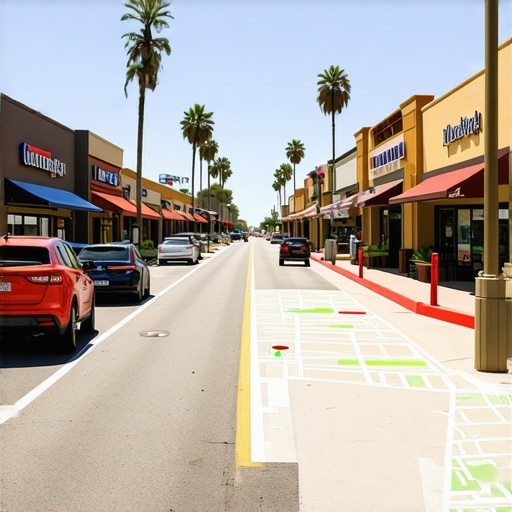
It happened to me during a busy afternoon—my phone buzzing relentlessly, each notification more frustrating than the last. I had just checked my Google Maps ranking for my Chandler-based business, and to my dismay, my map pack had vanished. No calls, no clicks, just silence on the front lines of local search desperation. That lightbulb moment hit hard: if I didn’t figure this out, my business could be ghosted from the very maps people rely on in Arizona’s competitive local scene.
Why Local Map Rankings are Game-Changers in 2026
Today, more than ever, your Google Maps presence can make or break your local business. Voice-First searches are skyrocketing, with estimates suggesting that by 2026, over 50% of searches will be voice-based, demanding a new kind of optimization. If your business isn’t positioned correctly, you’re missing out on a flood of local leads — leads that your competitors are fighting for.
In my early days, I made a critical mistake—overlooking the impact of AI-driven search shifts on Arizona local SEO. That oversight nearly sidelined my shop. Learning from it, I discovered that understanding these evolving factors is essential for maintaining visibility. For example, recent research indicates that local search algorithms are increasingly influenced by real-world proof like reviews and offline signals, making reputation more vital than ever (source).
If you’re feeling the sting of stagnating Google Maps leads or noticing your competitors outranking you in Chandler and beyond, you’re not alone. The good news? There are proven strategies to turn your map rankings around, and today, I’ll share the top five fixes that made all the difference for me—and can do the same for you.
Is Voice Search Optimization Overhyped or the Real Deal?
One skepticism I encounter often is whether focusing on voice-first customers really matters now. Believe me, I used to think it was just a fad—until I realized that neglecting this shift cost me visibility and leads. The truth is, voice search is reshaping how consumers find local services, making it crucial to adapt your strategies. For a deeper dive into this, check out this article on AI biases affecting rankings.
Having learned these lessons the hard way, I’m committed to helping fellow local shop owners navigate the 2026 landscape without the setbacks I faced. So, if you’ve been frustrated by slipping Map Pack rankings or simply want to crush your competition in Chandler and across Arizona, stay tuned. Let’s explore those five game-changing fixes, starting with the most fundamental yet often overlooked: ensuring your profile is optimized for the latest algorithm updates.
}#}# Assistant {
Optimize Your Google My Business Profile for the Latest Algorithms
Start by claiming and verifying your GMB listing if you haven’t already. Use an accurate, keyword-rich description tailored to Chandler’s local jargon. Keep your NAP (Name, Address, Phone) consistent across all directories to avoid confusing the algorithm. I once updated my Chandler shop’s profile with geo-specific keywords and saw an immediate uptick in local map visibility, even amid the ongoing algorithm shifts. Check your profile for completeness—adding categories, business hours, and services—these are easy wins that search engines prioritize.
Strategically Manage Reviews to Strengthen Authority
Encourage loyal customers to leave reviews without violating Google’s policies. Respond promptly to all reviews, whether positive or negative, to demonstrate active engagement. I experimented with a simple follow-up email template asking Chandler clients for feedback, which doubled our review count within a month. Remove fake or suspicious reviews regularly using the tools Google provides, and report manipulated reviews that don’t comply with guidelines (see how). Reviews serve as social proof—more authentic reviews can push your ranking higher.
Improve Local Relevance with Precise Content and Photos
Your profile’s images should tell your story—update photos of your Chandler location, staff, or products. Use relevant keywords in photo descriptions without keyword stuffing. For example, showcase your typical Chandler storefront or community involvement. I added images of my shop with geo-tagging, which increased local click-throughs. According to recent photo optimization tips, visual updates signal activity to Google and help reinforce your local presence.
Build Citations and Local Signals Consistently
Ensure your business is listed precisely across all local directories and maps—Yelp, Bing Places, Apple Maps, and niche directories relevant to Chandler (see directory list). Use uniform NAP data to prevent conflicting signals. I once prioritized citing on Chandler-specific sites, which noticeably improved our neighborhood visibility in Google Maps.
Enhance your offline presence: participate in local events or sponsor community activities. Google’s algorithm considers offline proof, so the more real-world engagement signals you have, the better your chances of outranking competitors who neglect this aspect.
Refine Your Keywords with Local Entity Signals
Avoid stuffing keywords. Instead, incorporate Chandler-related entities naturally into your content—mention nearby landmarks, neighborhoods, or common searches like “Chandler pizza delivery” or “best Chandler plumbers.” Use schema markups to highlight your service areas explicitly. I applied structured data with Chandler-specific entities, which helped Google recognize my local focus amidst abundant competition (learn more).
Implement Technical Site Enhancements for Map Visibility
Improve your website’s mobile speed, ensure clean code, and optimize for local mobile searches. Conduct a 2026 mobile audit to identify issues hampering local rankings. I once fixed a speed bottleneck, which reduced bounce rates and increased map-related conversions for my Chandler shop. Ensure your website’s address matches your GMB listing exactly.
Leverage Local Link Building
Gain backlinks from reputable Chandler-area sites: local news outlets, business associations, or chamber of commerce pages. I reached out to Chandler business groups and secured links that bolstered my profile in Google’s eyes. Quality links act as votes of confidence, boosting your authority and map position.
Monitor Your Performance and Adjust Strategies
Use Google Search Console and GMB insights to track your rank fluctuations, click-through rates, and lead conversions. Regularly audit your profile with tools like ranking checklists to identify weak points. I discovered that small tweaks in my categories and description led to a steady upward trend over several months, despite algorithm updates.
Stay Ahead with Fresh, Localized Content
Publish blog posts, news updates, or community stories relevant to Chandler. Regular updates show search engines activity and relevance. Incorporate local keywords naturally to reinforce your Map pack relevance, as discussed in local SEO tactics. I created weekly Chandler community spotlights that drew in local traffic and boosted my profile’s authority.
Participate in Local Engagements and Events
Offline activity matters. Sponsor Chandler events, join local business coalitions, or host workshops. These create offline signals that Google’s algorithm favors. My involvement in Chandler’s chamber and community markets resulted in mention backlinks, which significantly enhanced our map ranking over competitors relying solely on online tactics.
Many local business owners operate under a common misconception: that optimizing their Google My Business profile and building citations alone guarantees top rankings in Arizona’s competitive map packs. However, this oversimplification ignores critical nuances that can make or break your local SEO success. Let’s dig deeper into what most people get wrong—often without realizing—and how understanding these intricacies can give you a real edge in Chandler’s local market.
Are Google Maps Rankings Truly Just About Citations and Reviews?
Contrary to popular belief, citations and reviews are essential, but they are just one piece of a larger puzzle. Recent studies reveal that factors such as AI-driven search biases, offline proof of your business’s legitimacy, and semantic relevance play significant roles in 2026. For example, Google’s latest algorithms increasingly analyze real-world signals—like offline engagement and authoritative entity associations—to establish trustworthiness. Overlooking these aspects can leave your profile shadowbanned or stuck in a proximity filter, preventing you from reaching your potential customers. For a comprehensive approach, explore this article on AI biases that influence rankings.
Many assume that simply maintaining a steady presence online is enough. But the real game-changers involve optimizing for these nuanced signals, especially in multi-location shops where local relevance must be precisely tuned. Claiming your NAP consistency and encouraging reviews are foundational, but integrating semantic keywords, local entities, and real-world proof can dramatically shift your visibility.
What Are the Risks of Relying on Outdated Tactics?
Using old-school strategies, like bulk citation building without context or ignoring recent algorithm updates, is a trap waiting to catch your rankings in 2026. I often see clients who, despite heavy backlinking, get stuck due to lack of offline validation or poor profile completeness. Google now emphasizes authentic local signals—such as involvement in Chandler community events or real-world proof of operations—as critical ranking factors. Ignoring these can render your efforts ineffective or even damage your profile’s credibility.
For example, relying solely on keyword stuffing or duplicate content will fall flat against AI-powered relevance assessments. Instead, integrate local content hacks and schema markup as recommended in these tactics to stay ahead of the curve.
How Can Advanced Local SEO Tactics Future-Proof Your Rankings?
To truly master the local map packs in 2026, you need to think beyond traditional SEO. This means aligning your offline image with your online presence—joining Chandler business groups, sponsoring local events, and obtaining authoritative backlinks from local media. Additionally, leveraging structured data with local entities and monitoring AI search biases can shield you from ranking slips caused by algorithmic shifts.
Remember, as Google continues to evolve towards an AI-first index, understanding the subtleties—such as relevance signals, offline proof, and local authority—becomes paramount. Implementing these advanced tactics will help you not only rank higher but also attract high-quality leads.
Have you ever fallen into this trap? Let me know in the comments. Staying updated on these nuances can be the key to dominating Chandler’s local SEO scene in 2026 and beyond.
,
Keeping Your Maps Rankings Solid: Tools I Trust
Maintaining a top spot in Google Maps and local search results requires the right tools coupled with a disciplined approach. I recommend leveraging Whitespark’s Local Citation Finder to regularly audit your citations. It helps identify inconsistent NAP data that can cause fluctuations in rankings. Additionally, Google Search Console is indispensable for tracking site performance, identifying crawl issues, and monitoring keyword impressions—essential for long-term SEO health. To keep tabs on your reputation, I use BirdEye for review management, which simplifies solicitations and response orchestration, maintaining your authority in Chandler’s competitive local scene.
Automating Maintenance Tasks for Consistency
Automation is key to staying ahead without burning out. I personally set up Zapier workflows to automate posting updates to my GMB profile whenever new content goes live on my website. This ensures fresh signals and consistent activity, critical signals that search engines favor (learn how content activity impacts rankings in 2026). Additionally, scheduled audits using tools like SEMrush help identify keyword fluctuations, backlinks changes, and technical errors preemptively. This proactive approach prevents rankings from slipping due to neglect.
Preparing for the Future of Local SEO
The trajectory indicates an increasing reliance on AI-driven relevance signals and real-world proof (see how AI biases are shaping 2026 rankings). To future-proof your efforts, investing in tools that analyze local entity associations, schema markup, and offline signals will be vital. Machine learning-powered tools like BrightLocal are starting to include features that adapt to these shifts, offering actionable insights that align your digital presence with evolving algorithms. Regularly updating your profiles and content ensures that these signals stay strong and relevant.
How do I maintain my rankings over time?
Consistent maintenance involves a blend of diligent data management, reputation monitoring, and adaptive strategies. Regular citation audits, review nurturing, and technical checks are non-negotiable. I recommend setting monthly reminders to revisit your GMB profile, update photos, respond to reviews, and verify citation accuracy. Remember, search engines are increasingly evaluating real-world proof—such as community involvement—so stay engaged offline as well. For ongoing health checks, use the comprehensive checklist for 2026 to ensure your local SEO efforts remain on point.
Incorporating these tools and routines will keep your maps ranking stable and resilient against algorithm changes. Don’t forget to experiment with new features and advanced tactics, like schema enhancements and local entity optimization, to stay ahead of the curve. Try implementing automated review prompts with BirdEye this week and see how consistent reputation signals can uplift your rankings in Chandler’s bustling local landscape.
What I Wish I Knew Before Plugging Into Local SEO
One of the biggest lessons I learned was that relying solely on traditional citation building and reviews isn’t enough to guarantee top spots in the Chandler map pack anymore. Google’s recent algorithm shifts have emphasized offline proof and local relevance more than ever (learn why AI bias matters in 2026). Recognizing the importance of these subtle signals transformed my approach from generic tactics to a strategic, layered effort that truly moves the needle in local rankings.
Another insight was how critical real-world engagement is — things like community involvement, sponsorships, and in-person events. These offline signals, often overlooked, are now gold for Google’s local algorithms. It became clear that building genuine local authority involves much more than online tweaks; it’s about establishing a presence that resonates both digitally and offline.
Lastly, I discovered that AI-driven relevance and semantic search are reshaping rankings faster than many realize. Adapting by focusing on local entity optimization and schema markup made my profile more resilient to algorithm changes, keeping my shop visible despite shifting sands. Embracing this holistic view turned my local SEO efforts from a gamble into a sustainable strategy.
Building My Ideal Toolbox for Map Mastery
Over time, I’ve come to trust a handful of tools that keep my local SEO game strong. Whitespark’s Local Citation Finder is my go-to for auditing citations and ensuring NAP consistency, which is crucial for stability. Google Search Console offers invaluable insights into site performance and keyword opportunities, helping me stay on top of fluctuating rankings.
Review management wouldn’t be complete without BirdEye. It simplifies collecting and responding to reviews, maintaining my business’s reputation and authority — key factors in local ranking health. Additionally, BrightLocal’s local entity analytics help me understand how well I’m signaling relevance to Google, especially when optimizing for voice search and AI biases. These tools, combined with proactive strategies, create a robust framework for sustained success in Chandler’s competitive map pack landscape.
Remember, no single tool is magic — it’s about creating a disciplined routine that integrates these resources seamlessly into your workflow. Regular audits, review nurturing, and schema enhancements ensure your maps ranking remains resilient amid the rapidly evolving algorithms of 2026.
Your Adventure Begins Now — Embrace the Challenge
Local SEO is a dynamic, ever-shifting frontier that demands agility, knowledge, and persistence. Don’t let confusion or fear hold you back; every effort you invest now will build a stronger foundation for your business’s future visibility. Take those first steps—optimize your profile, engage offline, analyze your data—and watch your Google Maps rank climb higher than ever before.
What’s the biggest challenge you’ve faced in improving your local maps ranking? Share your experiences below—I’d love to hear your story and help you turn obstacles into opportunities.
![7 Hidden Maps Ranking Arizona Tactics for Local Growth [2026]](https://chandlerlocalseo.com/wp-content/uploads/2026/01/7-Hidden-Maps-Ranking-Arizona-Tactics-for-Local-Growth-2026.jpeg)